Mark Meacher
Home
CASE STUDY
BMW Group Stock Search
Enabling customers to discover and buy a new BMW or MINI online.
Category: B2C Marketplace
Overview
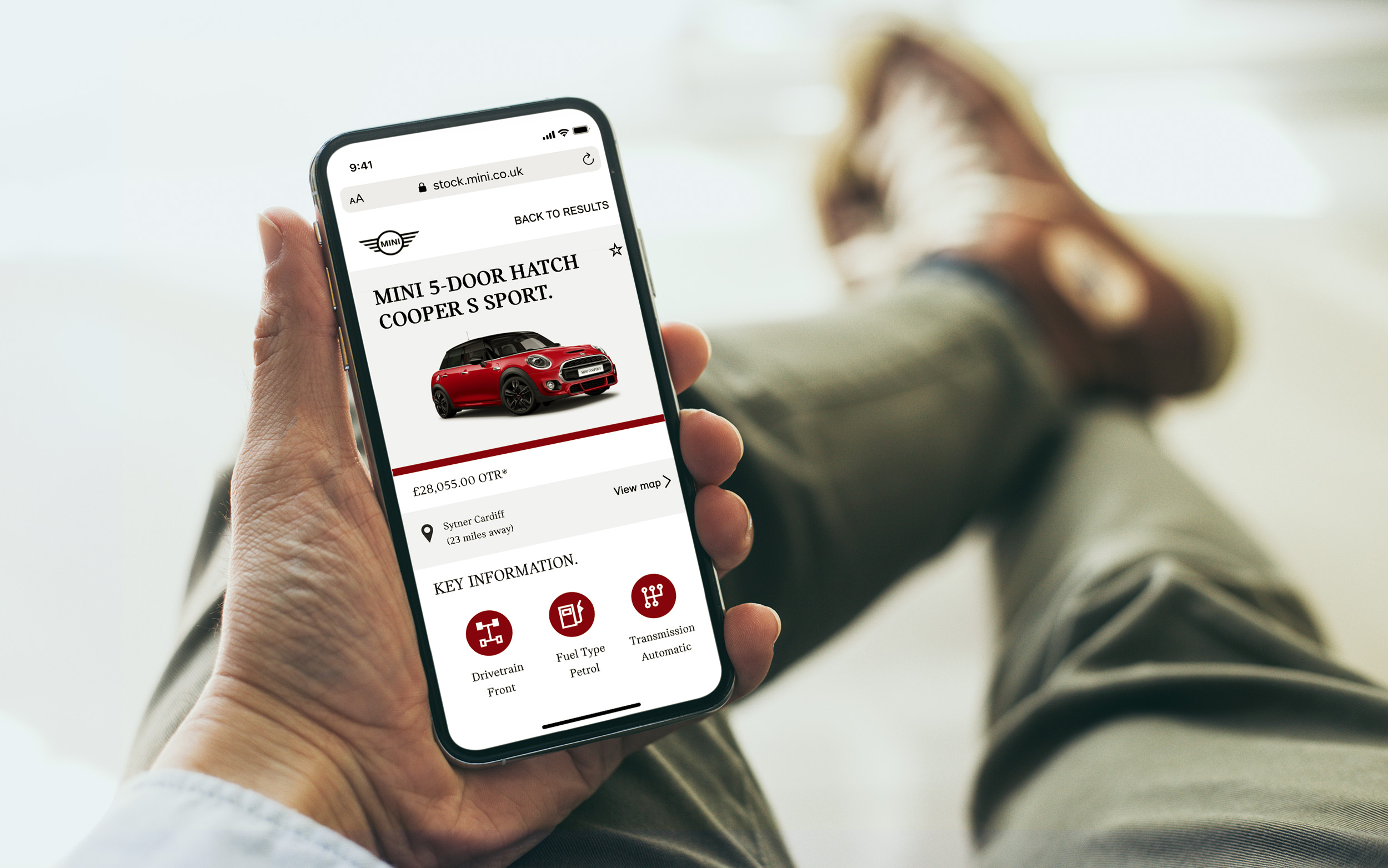
BMW Group needed a way for prospects to easily search and buy brand-new vehicles in their AOI without the lead time of building to order. New Car Locator makes this possible with advanced searching, online vehicle showrooms and purchasing abilities.
The problem
Buying a new car online can be a daunting and disjointed experience. How can the process be simpler for prospects to give them more choice in their search? Having the ability to view cars available either at a local or national level has become a core requirement for customers and for BMW Group UK. As a result, New Car Locator will be designed to provide customers with an optimum user experience, providing them with the information they need in order to purchase a new BMW or MINI online.
Approach
Research Phase
Objectives
- Create a one-stop-shop for users to discover and buy a new BMW or MINI
- Generate high quality leads for BMW Group
The initial “As a, I want, so that” research identified three types of user for this new tool; prospects accessing via the national portal, prospects accessing in showroom and prospects accessing via specific retailer websites. Each segment showed similarities in terms of their needs such as the need to see vehicles by name, colour and promotional offers. The main difference between the user types was their access point to the tool, whether organically via an online search, directly via the national brand websites or direct through a retailer showroom. Once each of the segment needs were identified, these were then categorised using the MoSCoW method.
Ideation phase
Key to developing this tool was first understanding how users might need to use it. Initial user flows were informed by the the criteria from the initial user research mentioned above. The product team identified early on that there were going to be multiple points in the flow in which users would need the ability to not only create a search criteria but also amend it. The success of the user flow lies in its ability to simplify a vast array of data and search possibilities, narrowing them down into just main decision points for the user across the whole site.
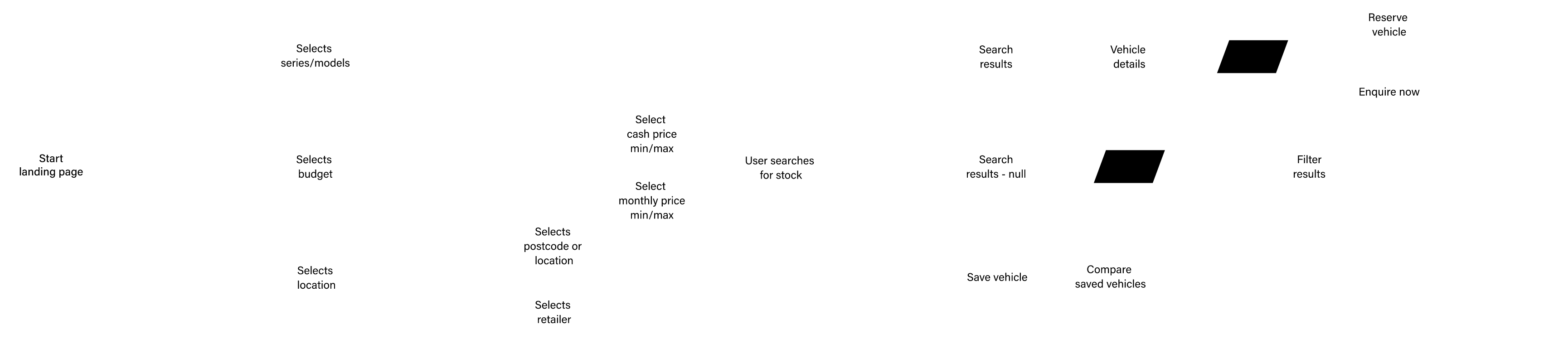
User journey mapping
UX Phase
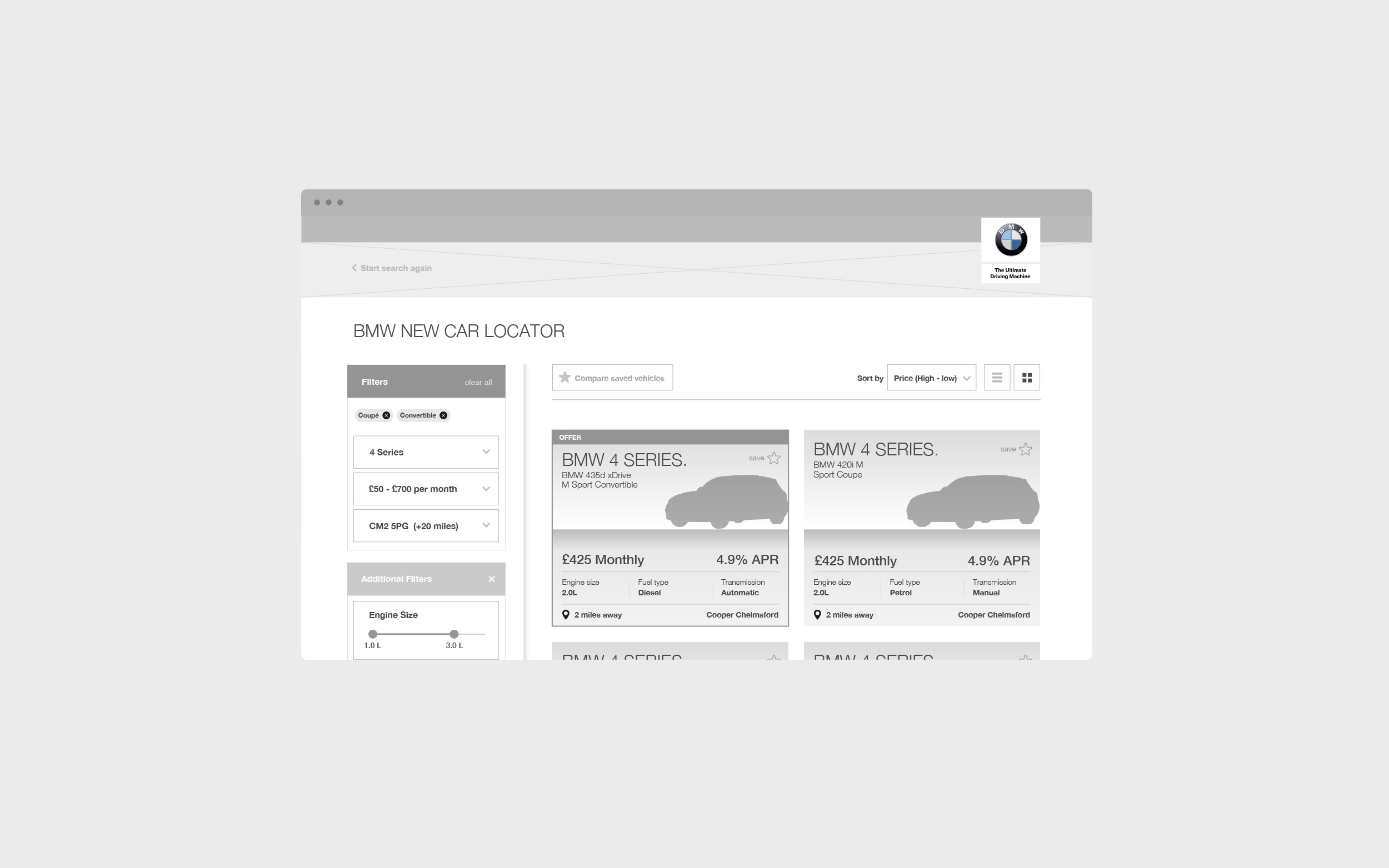
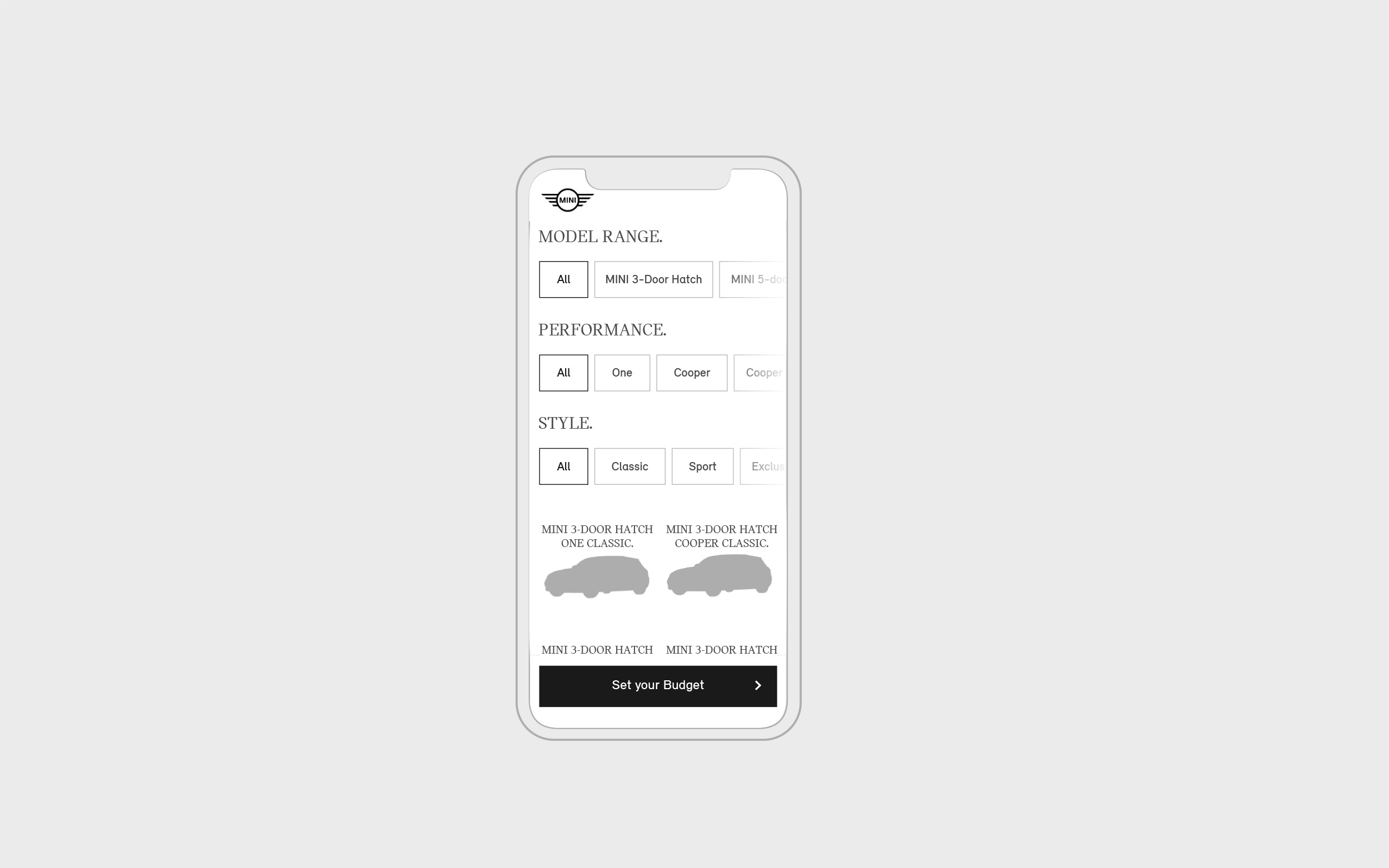
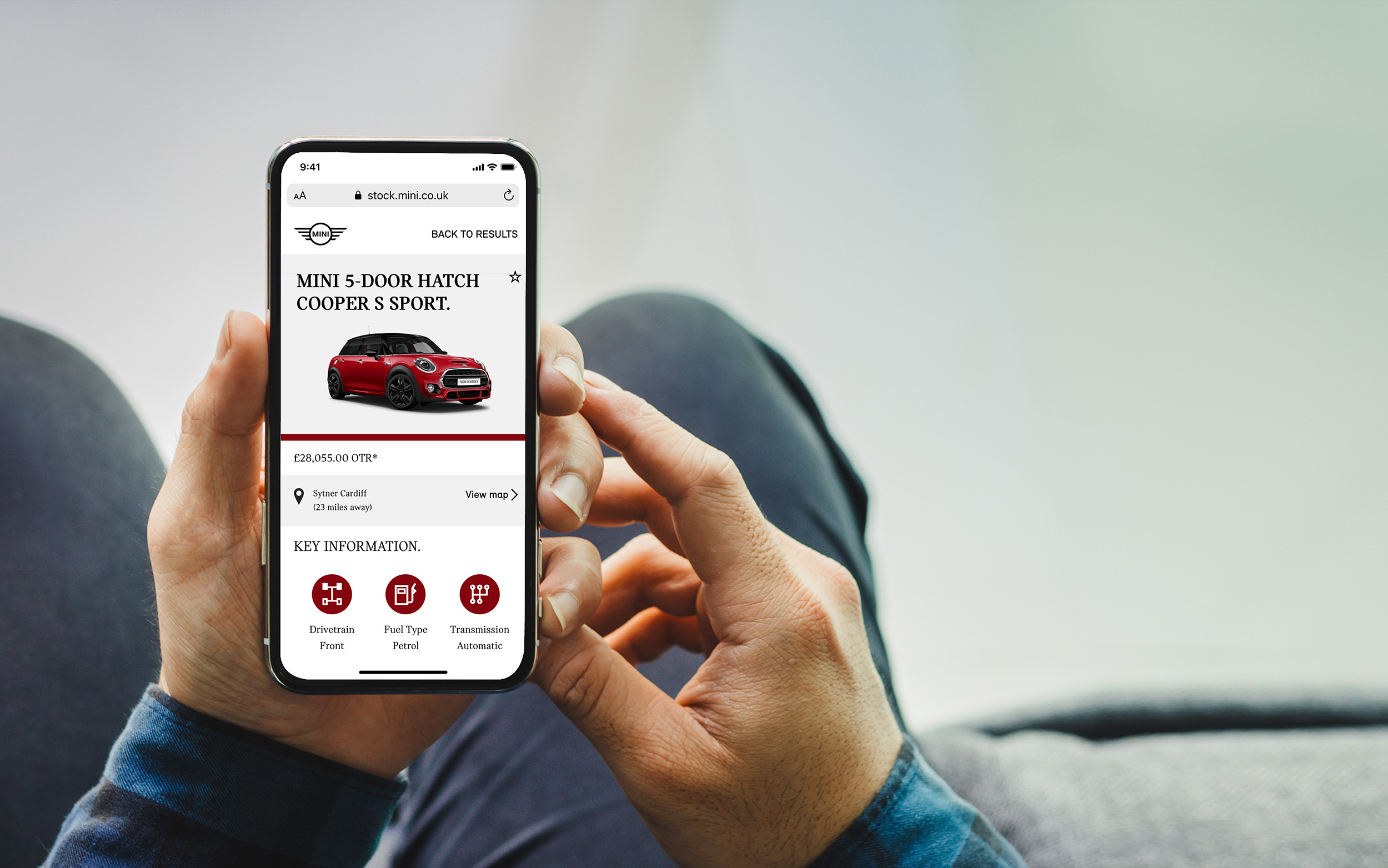
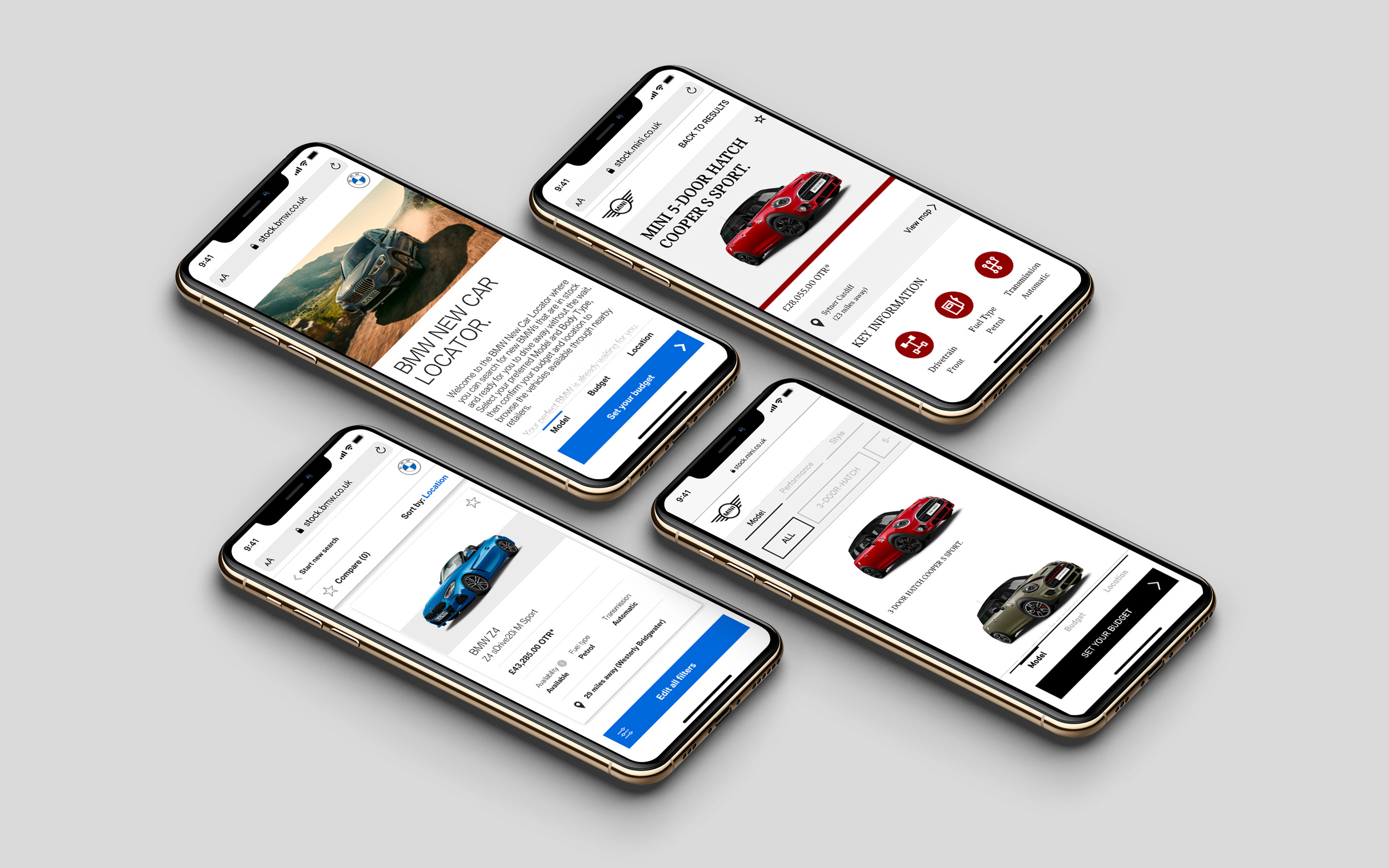
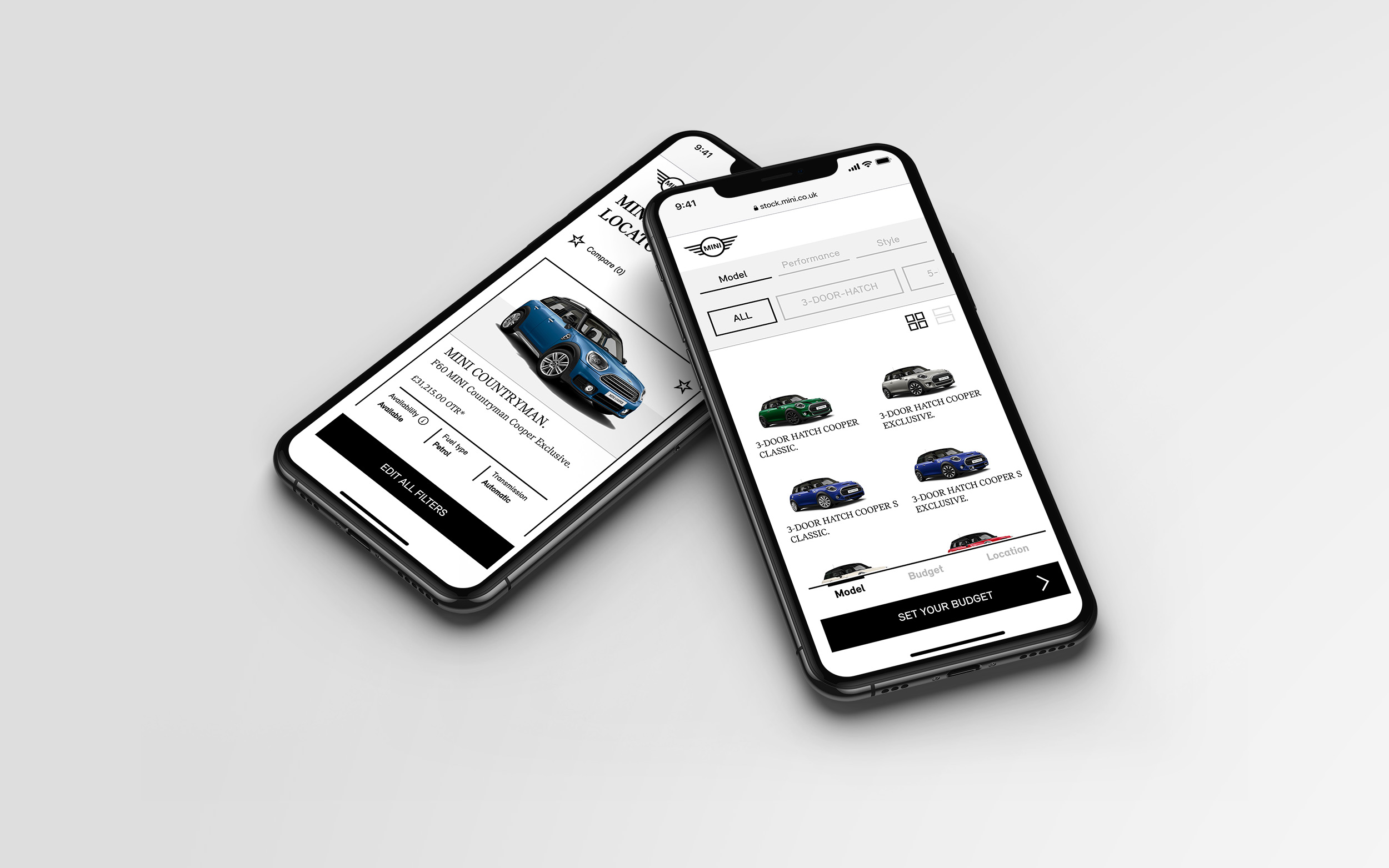
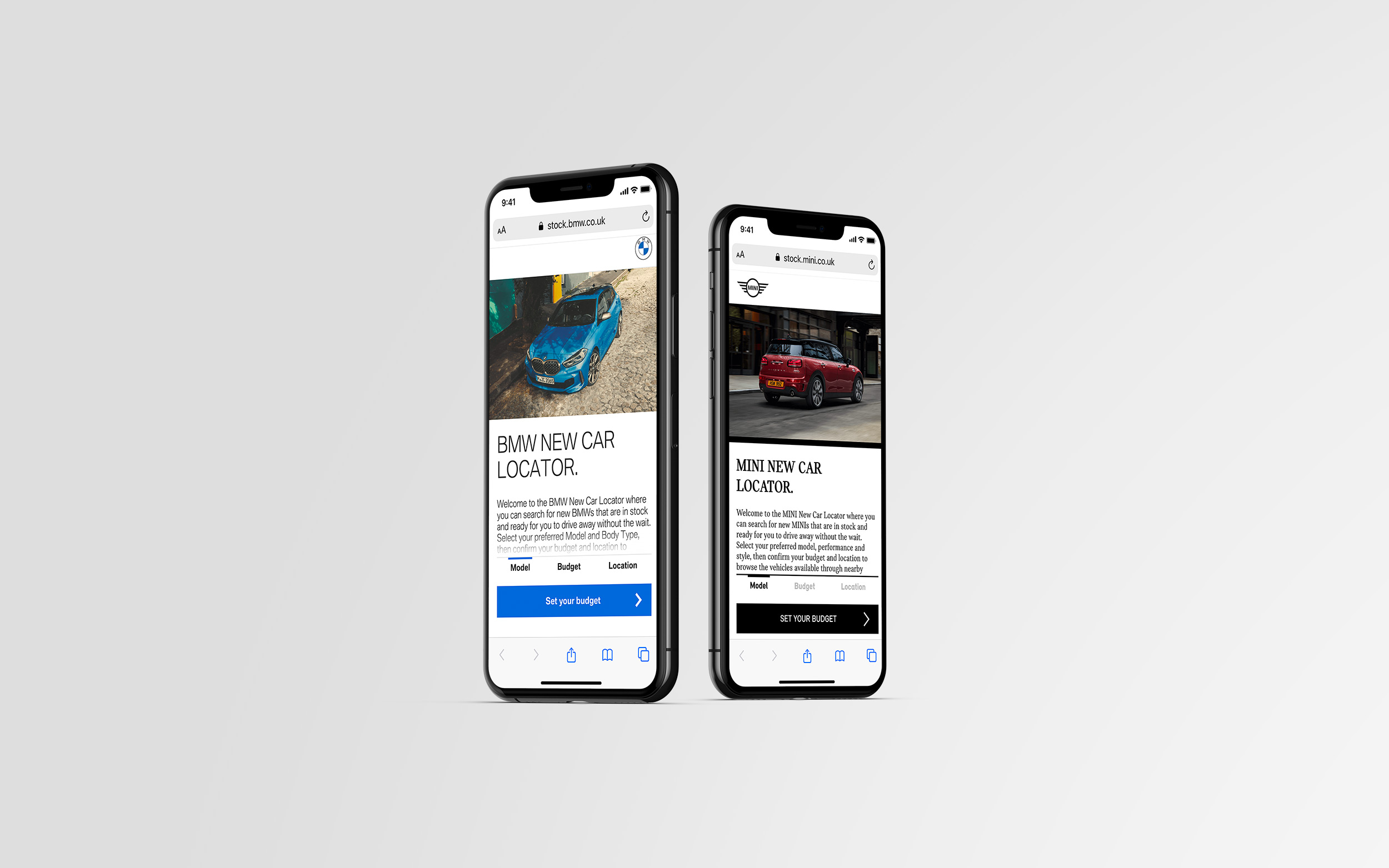
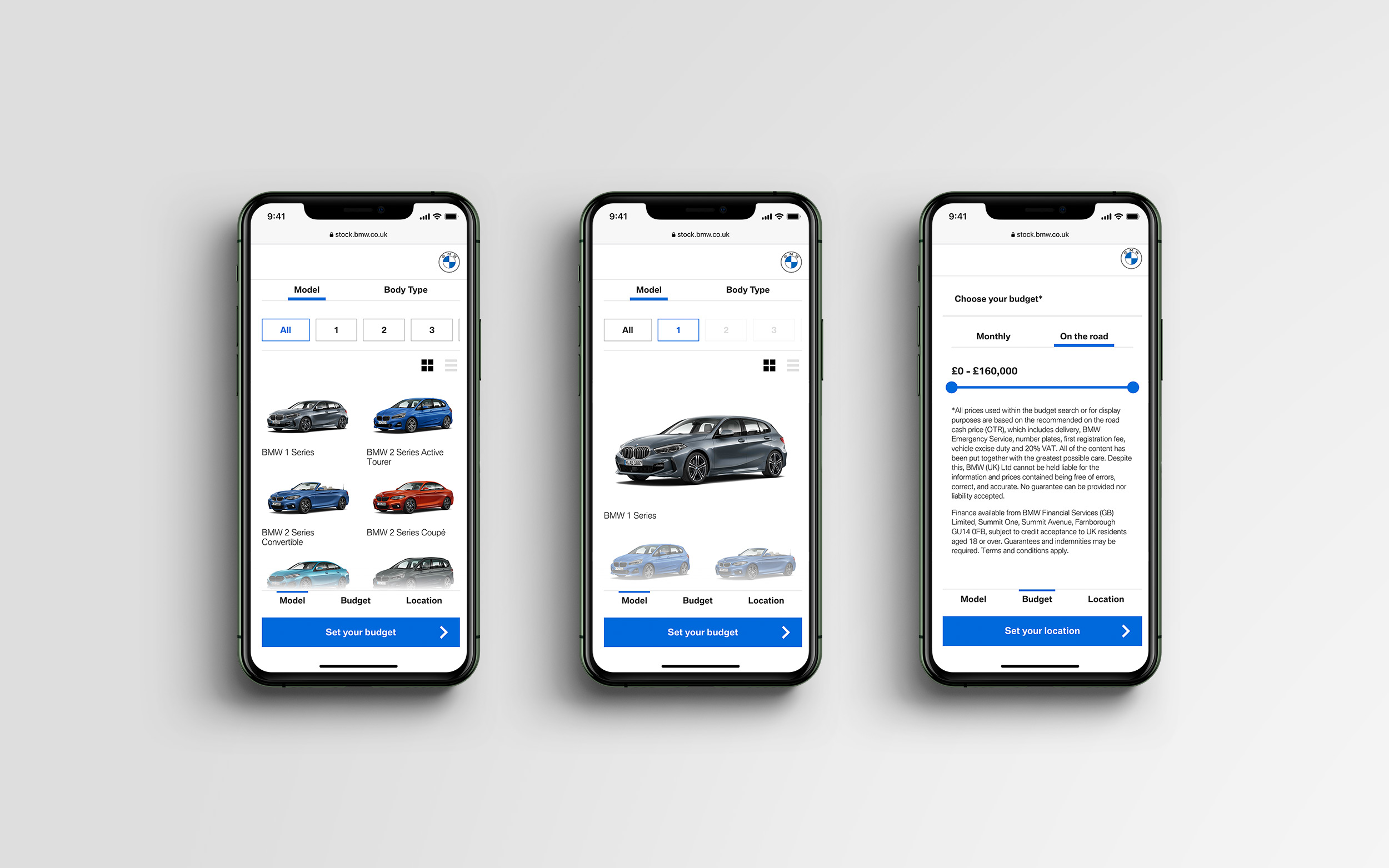
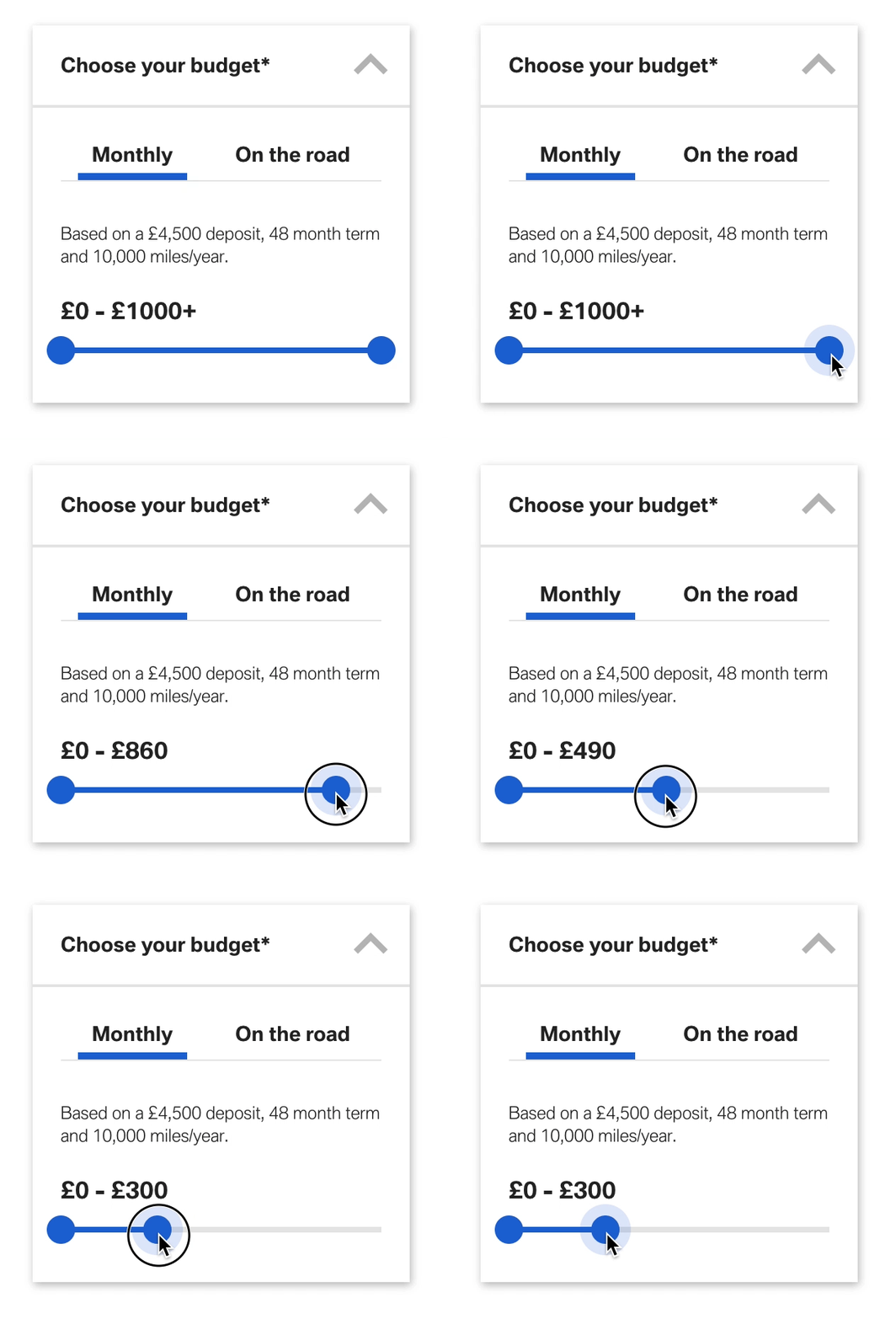
During the UX discovery phase, the team explored multiple ways in which we could best present a large array of search criteria, the available models to select and their available features. We explored ways in which the mobile journey could work, taking cues from mobile apps and creating sticky search and CTA sections ensuring every available option was at the users’ fingertips. Chiefly the desktop route utilised a horizontal model filtering system, similar to those found on both brand’s national websites to instil a sense of native familiarity. Secondly, all filters and search criteria were placed on the right side of the screen in a panel.
A key decision amongst the product team was the positioning of the filters panel, left or right and whether it should switch position at any stage. It was decided that the landing page had to put the cars centre stage by having them on the right because of the technical restrictions on using lifestyle imagery. When the site then needed to introduce more filters on the search results page, the panel would then switch to the left side, making it more familiar with large filtering sites like Amazon etc.
Design System
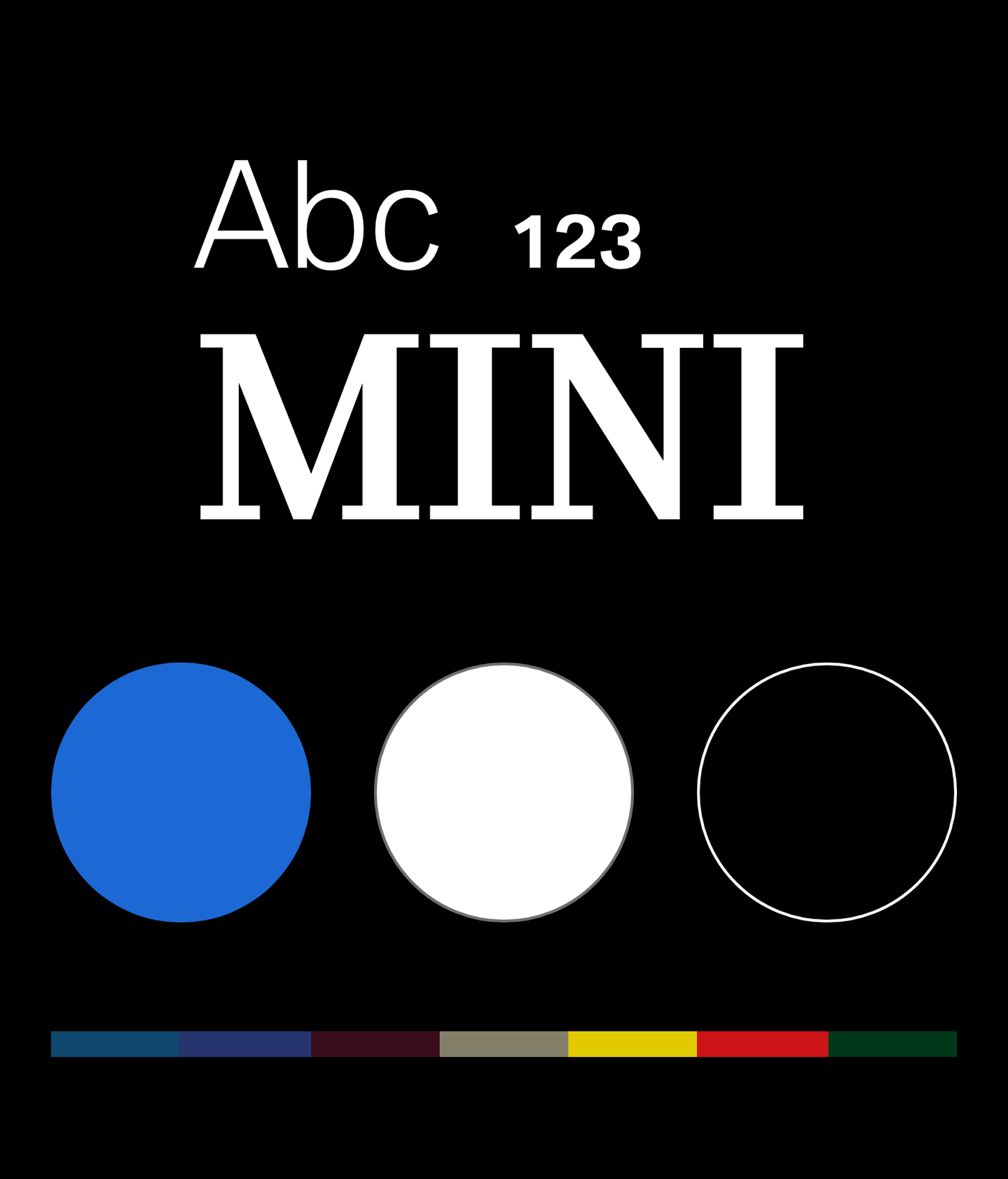
Another challenge with working cross brand on a tool like this was sizing and spacing of individual component areas. Fonts and weightings are very different across the two brands and could have caused real issues, especially as the team were staggering the design phases, BMW first and then MINI. To overcome this and to avoid any potential clashes during any of the design sprints, I worked with the designers to install a library system of branded components that could quickly be rebranded and checked for viability. This meant that as full scale designs were being made for a particular area of a site in any given sprint, designers could work along side that sprint, validating brand and design decisions across various elements.

Outcome
A website that brings together a large amount of complex model data and serves it up in a rich and engaging way, inspiring and exciting users to browse the site and select their favourite brand-new MINI or BMW model.
Next Project

Mark Meacher
mark.meacher@gmail.com
Mark Meacher
Home
CASE STUDY
BMW Group Stock Search
Enabling customers to discover and buy a new BMW or MINI online.
Category: B2C Marketplace
Overview
BMW Group needed a way for prospects to easily search and buy brand-new vehicles in their AOI without the lead time of building to order. New Car Locator makes this possible with advanced searching, online vehicle showrooms and purchasing abilities.
The problem
Buying a new car online can be a daunting and disjointed experience. How can the process be simpler for prospects to give them more choice in their search? Having the ability to view cars available either at a local or national level has become a core requirement for customers and for BMW Group UK. As a result, New Car Locator will be designed to provide customers with an optimum user experience, providing them with the information they need in order to purchase a new BMW or MINI online.
Approach
Research Phase
Objectives
- Create a one-stop-shop for users to discover and buy a new BMW or MINI
- Generate high quality leads for BMW Group
The initial “As a, I want, so that” research identified three types of user for this new tool; prospects accessing via the national portal, prospects accessing in showroom and prospects accessing via specific retailer websites. Each segment showed similarities in terms of their needs such as the need to see vehicles by name, colour and promotional offers. The main difference between the user types was their access point to the tool, whether organically via an online search, directly via the national brand websites or direct through a retailer showroom. Once each of the segment needs were identified, these were then categorised using the MoSCoW method.
Ideation phase
Key to developing this tool was first understanding how users might need to use it. Initial user flows were informed by the the criteria from the initial user research mentioned above. The product team identified early on that there were going to be multiple points in the flow in which users would need the ability to not only create a search criteria but also amend it. The success of the user flow lies in its ability to simplify a vast array of data and search possibilities, narrowing them down into just main decision points for the user across the whole site.
User journey mapping
UX Phase
During the UX discovery phase, the team explored multiple ways in which we could best present a large array of search criteria, the available models to select and their available features. We explored ways in which the mobile journey could work, taking cues from mobile apps and creating sticky search and CTA sections ensuring every available option was at the users’ fingertips. Chiefly the desktop route utilised a horizontal model filtering system, similar to those found on both brand’s national websites to instil a sense of native familiarity. Secondly, all filters and search criteria were placed on the right side of the screen in a panel.
A key decision amongst the product team was the positioning of the filters panel, left or right and whether it should switch position at any stage. It was decided that the landing page had to put the cars centre stage by having them on the right because of the technical restrictions on using lifestyle imagery. When the site then needed to introduce more filters on the search results page, the panel would then switch to the left side, making it more familiar with large filtering sites like Amazon etc.
Design System
Another challenge with working cross brand on a tool like this was sizing and spacing of individual component areas. Fonts and weightings are very different across the two brands and could have caused real issues, especially as the team were staggering the design phases, BMW first and then MINI. To overcome this and to avoid any potential clashes during any of the design sprints, I worked with the designers to install a library system of branded components that could quickly be rebranded and checked for viability. This meant that as full scale designs were being made for a particular area of a site in any given sprint, designers could work along side that sprint, validating brand and design decisions across various elements.
Outcome
A website that brings together a large amount of complex model data and serves it up in a rich and engaging way, inspiring and exciting users to browse the site and select their favourite brand-new MINI or BMW model.
Next Project
Mark Meacher
mark.meacher@gmail.com