Mark Meacher
Home
CASE STUDY
Sale Portal
Deepening the sale
Year: 2026
Category: Seller experience
AI Assisted
Overview
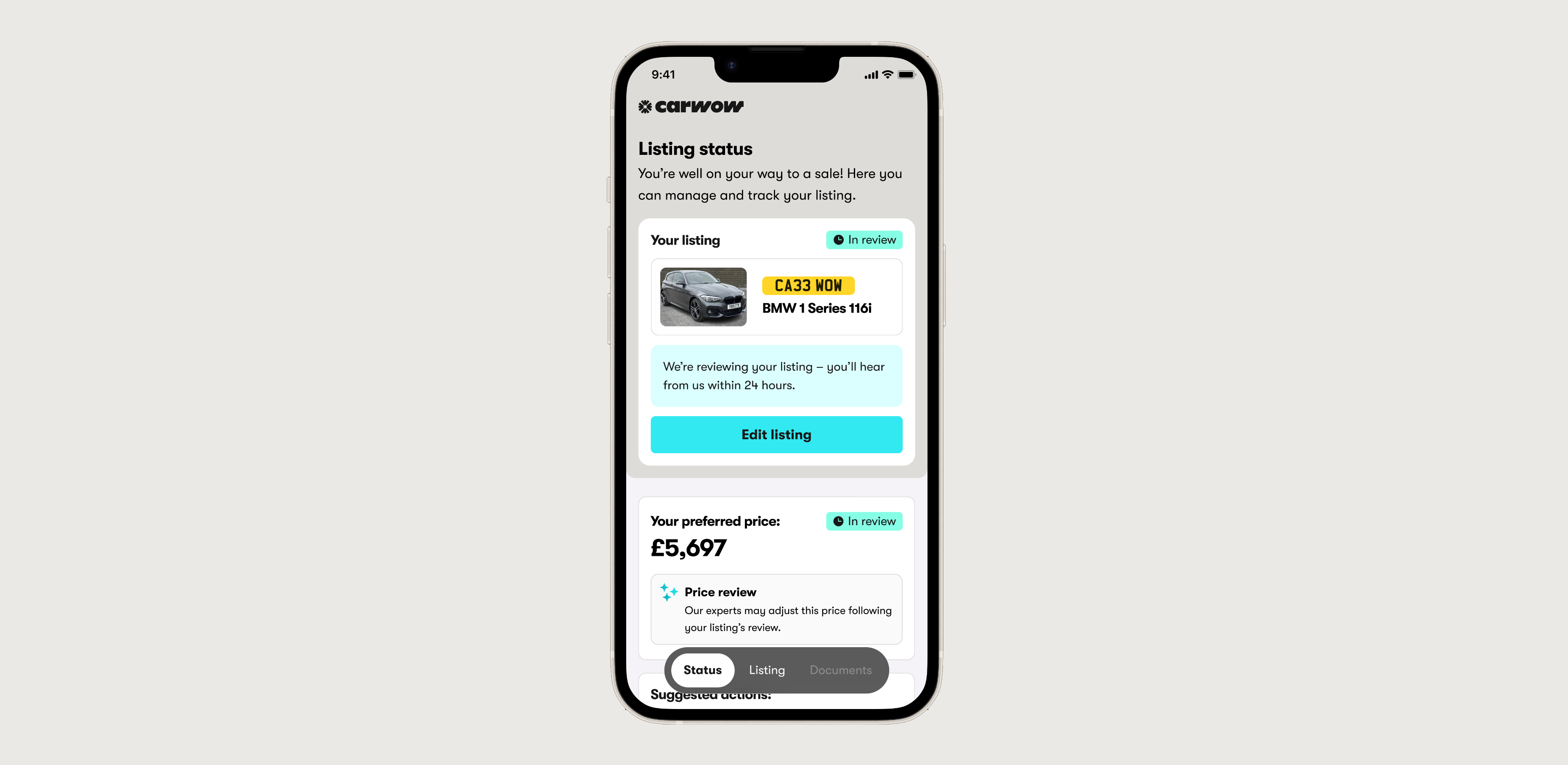
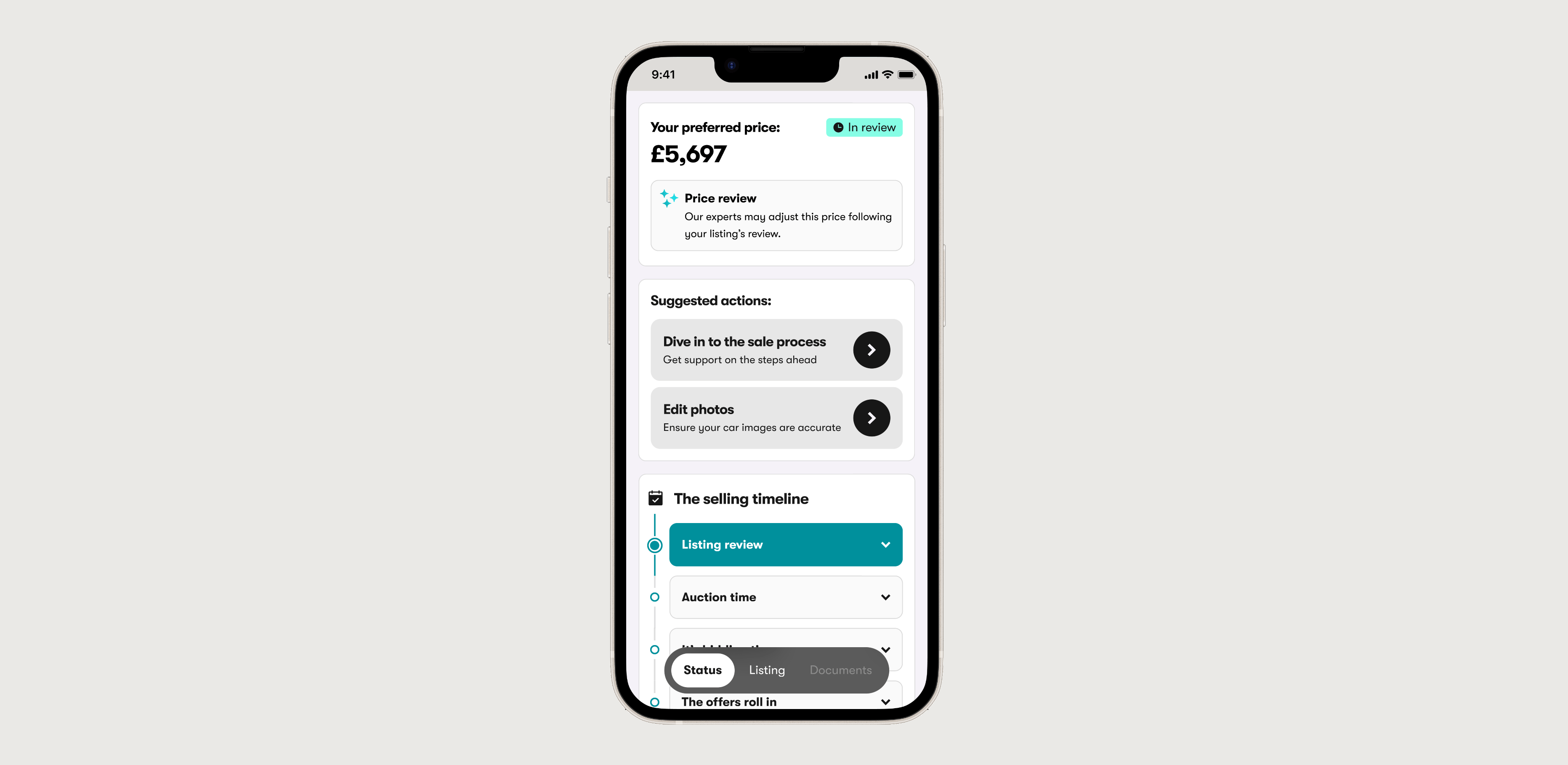
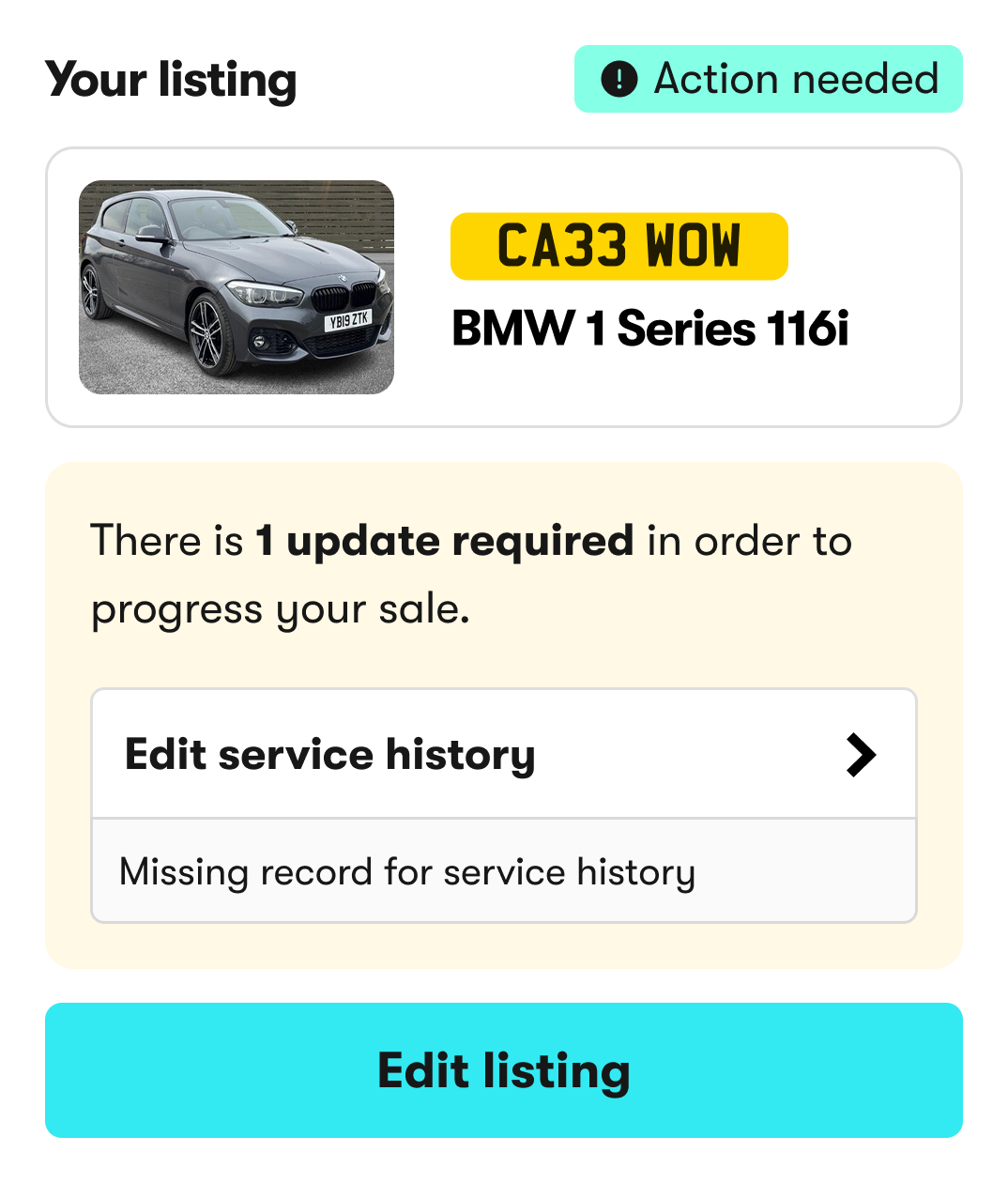
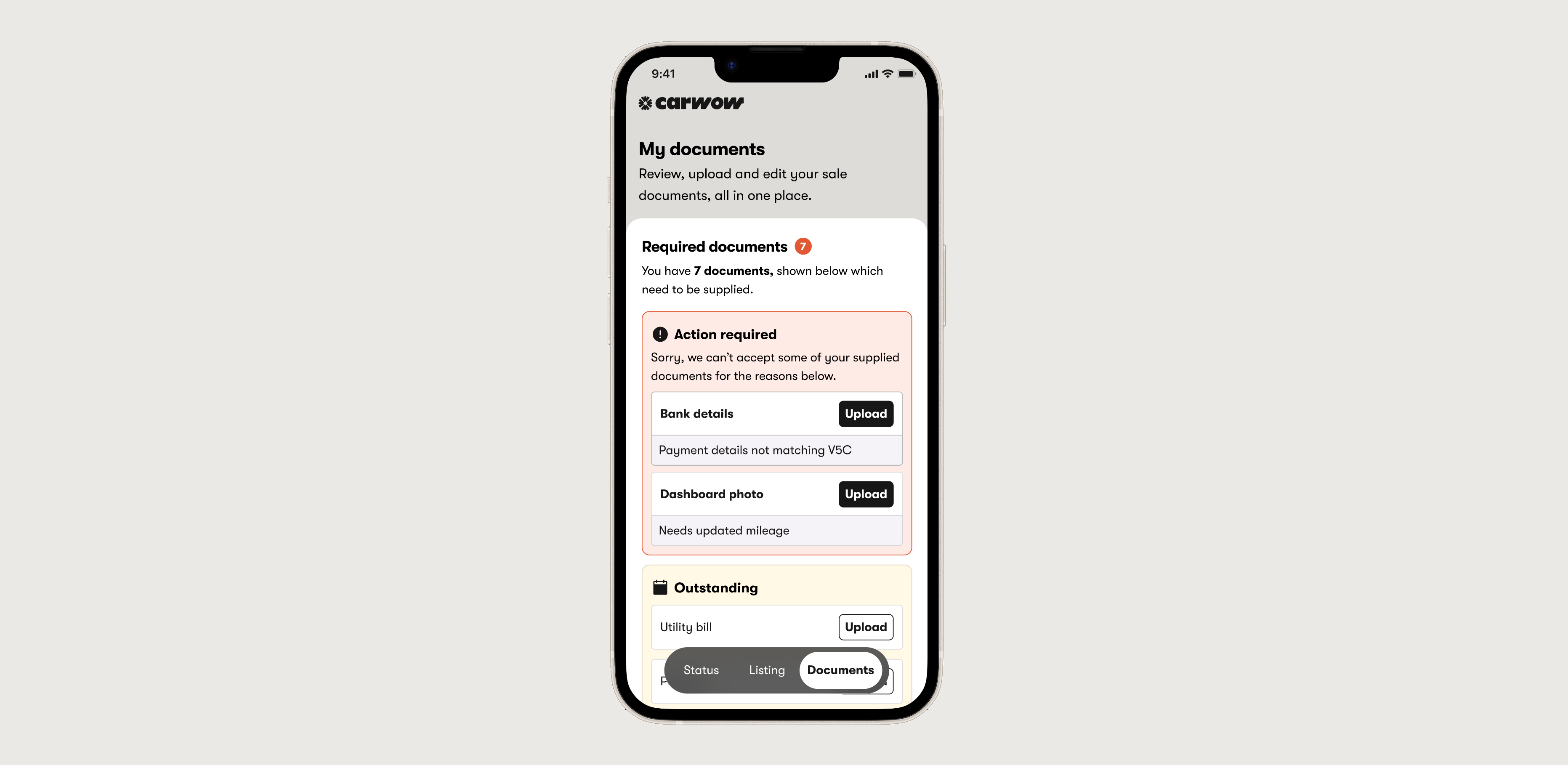
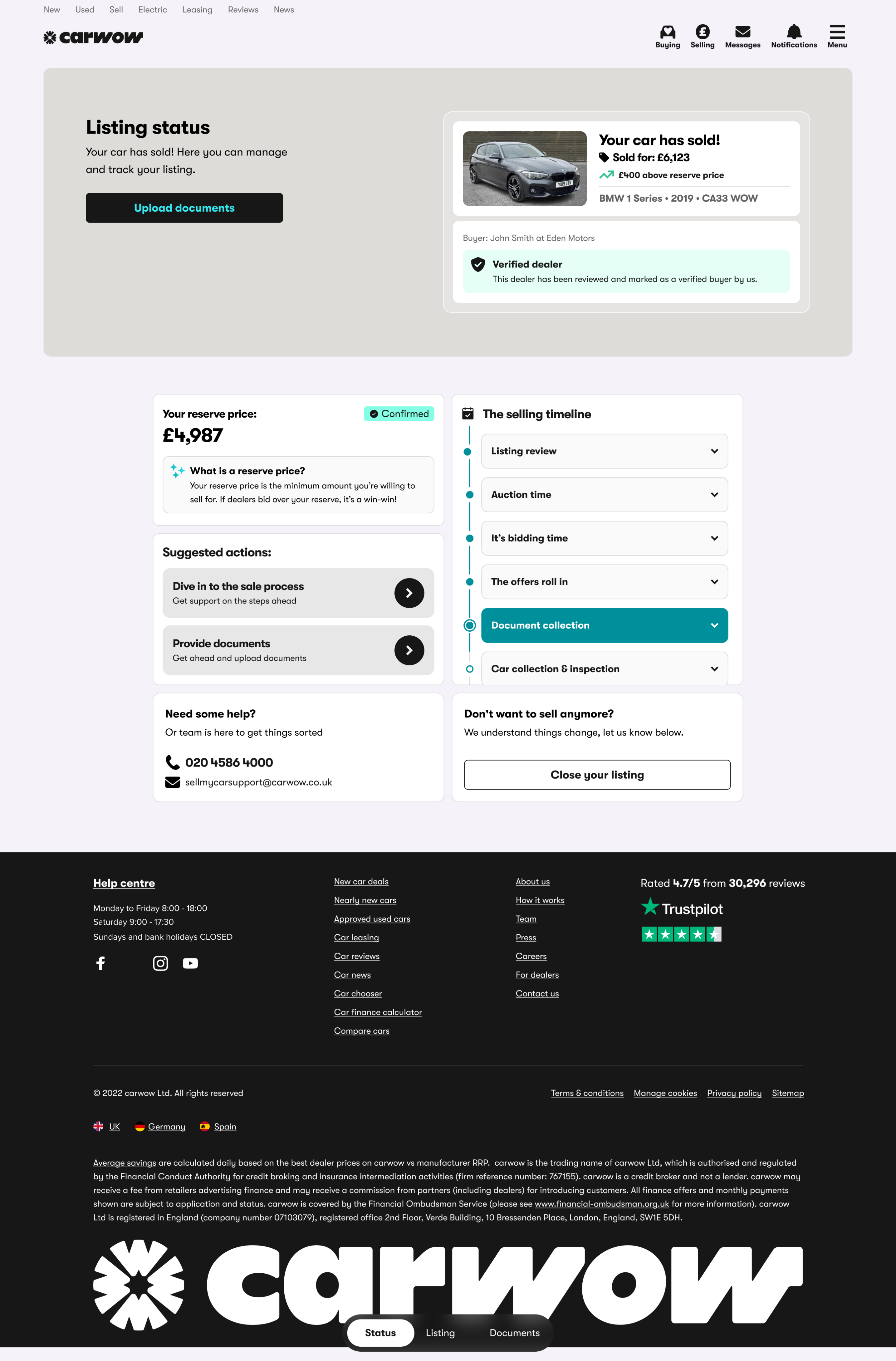
Sellers who'd submitted a car listing on Carwow had to go through the customer support team for even a basic status update or a correction to their listing, a slow round trip for something as simple as logging wrong damage. I led design on the Sale Portal MVP project, a self-serve home for a seller's listing after submission: one place to check status, understand what happens next, edit incorrect or missing details directly, and get educated on the end-to-end selling process, so sellers can resolve issues themselves and keep their sale moving without waiting on support.
Discovery
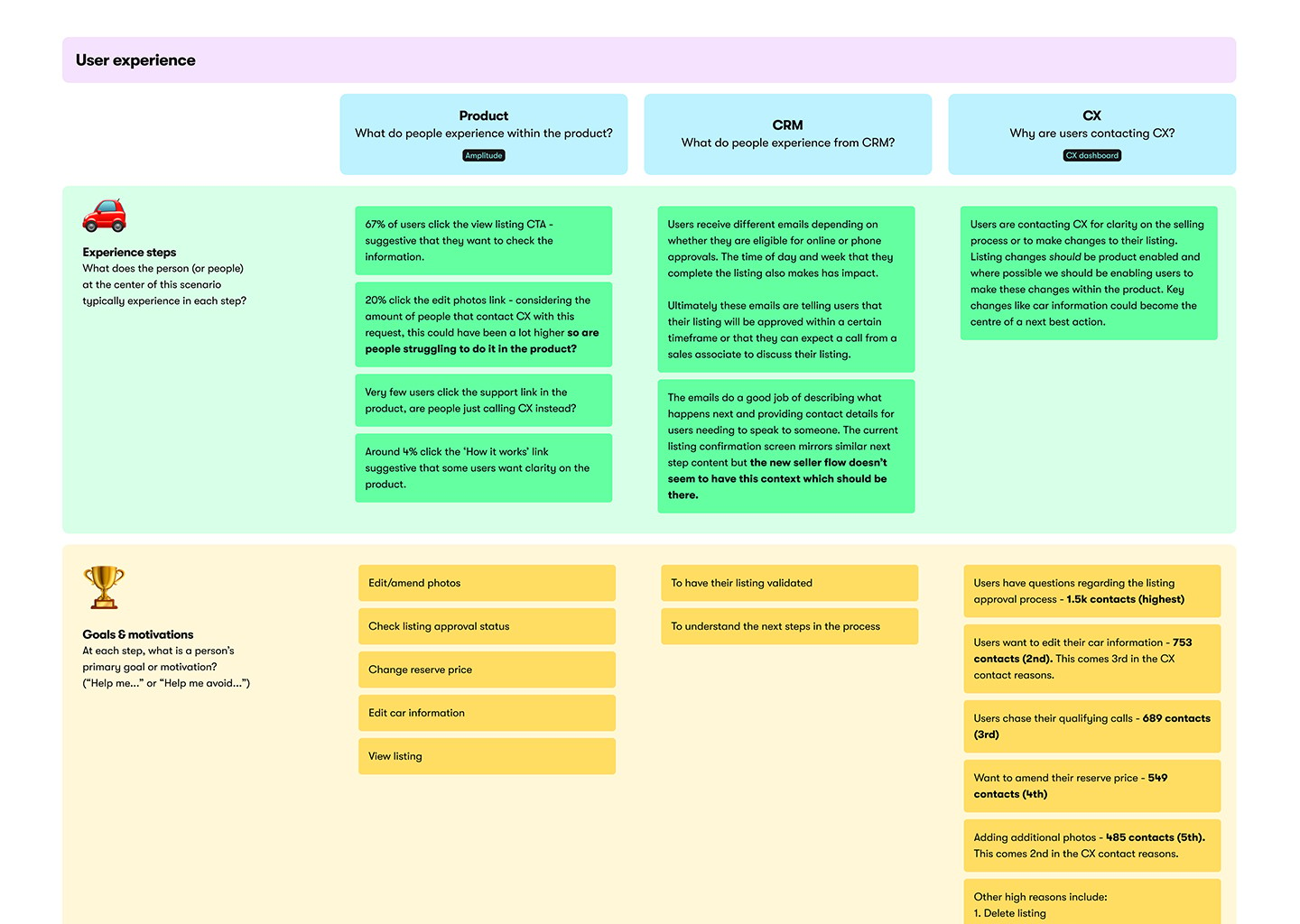
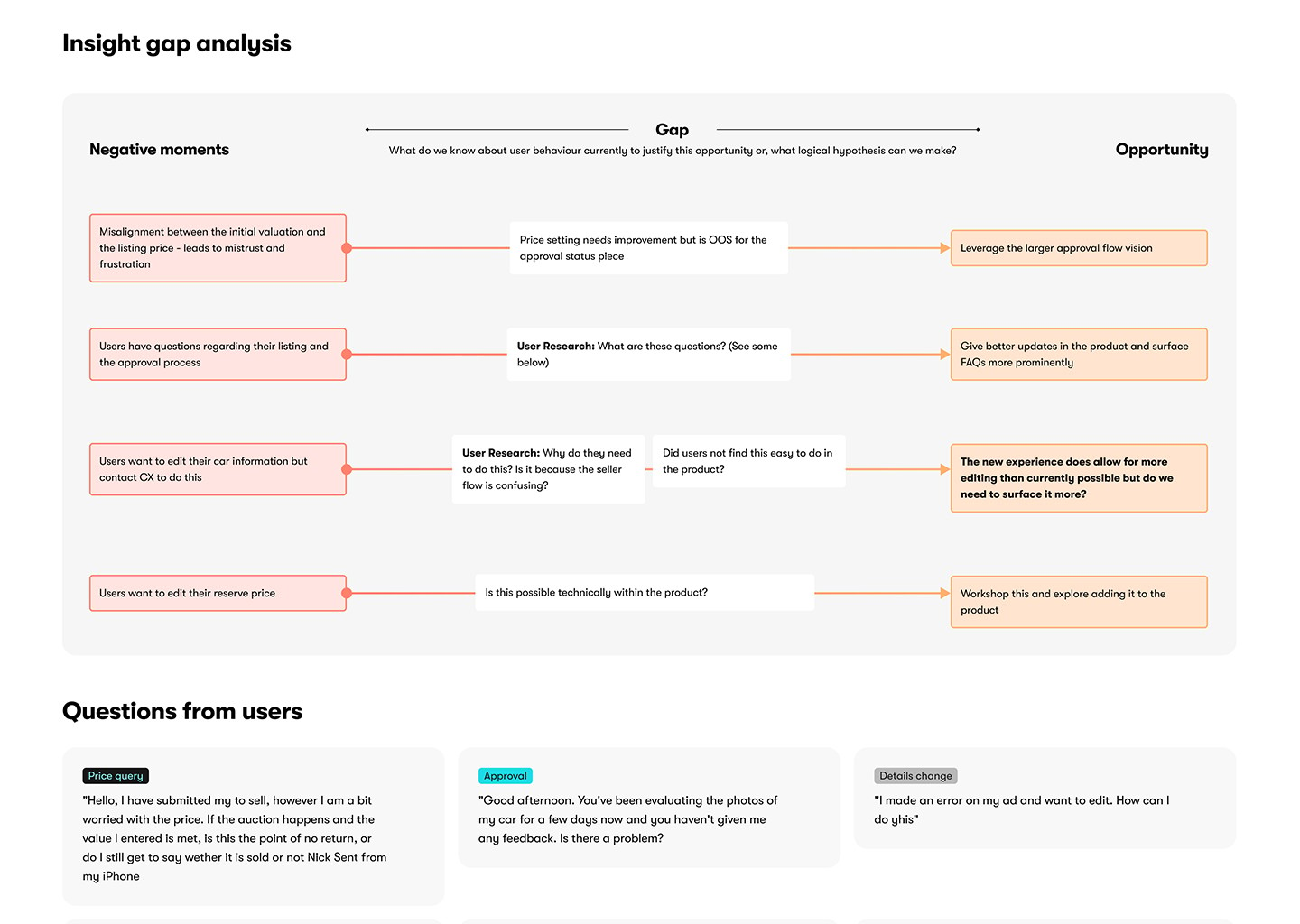
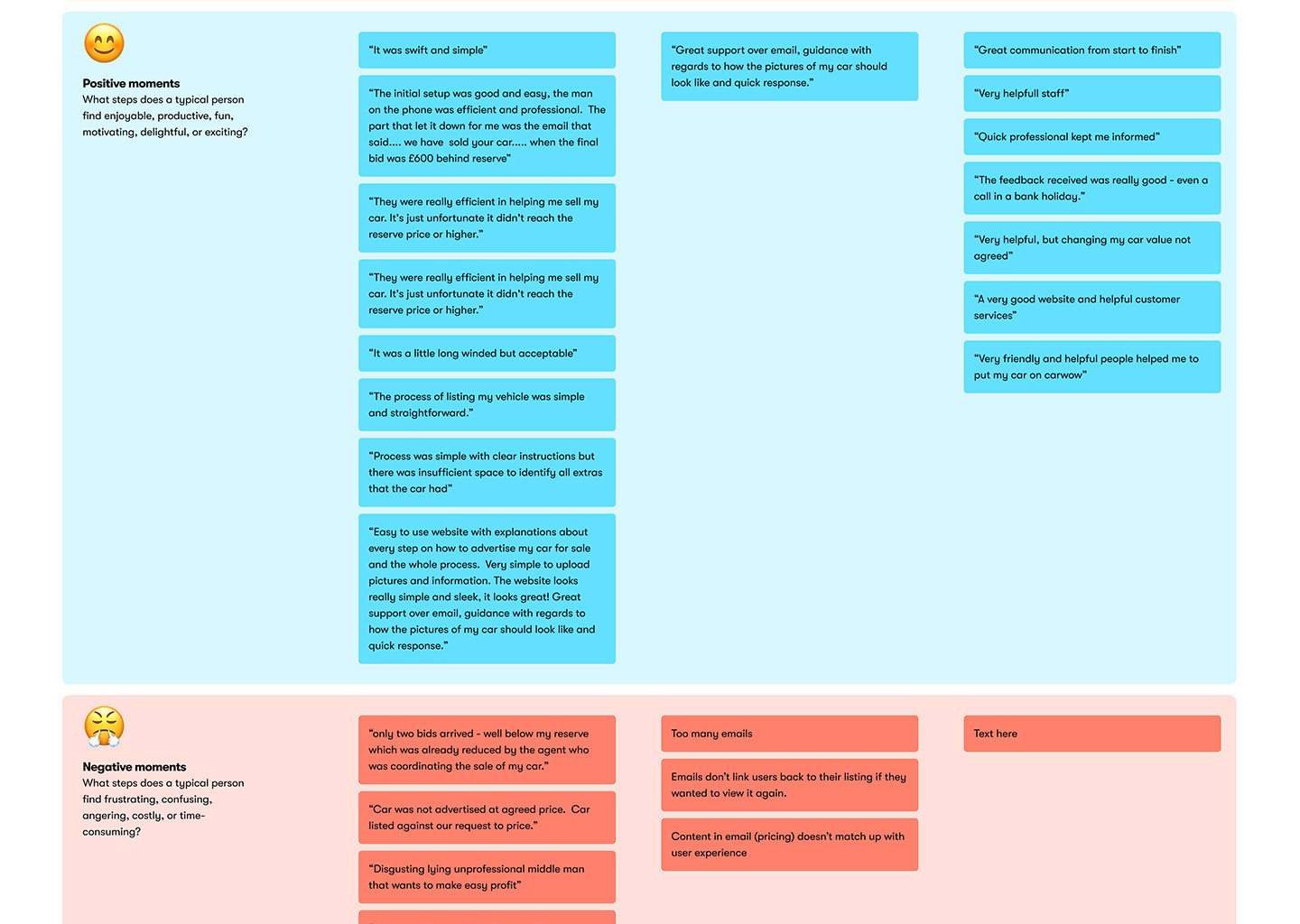
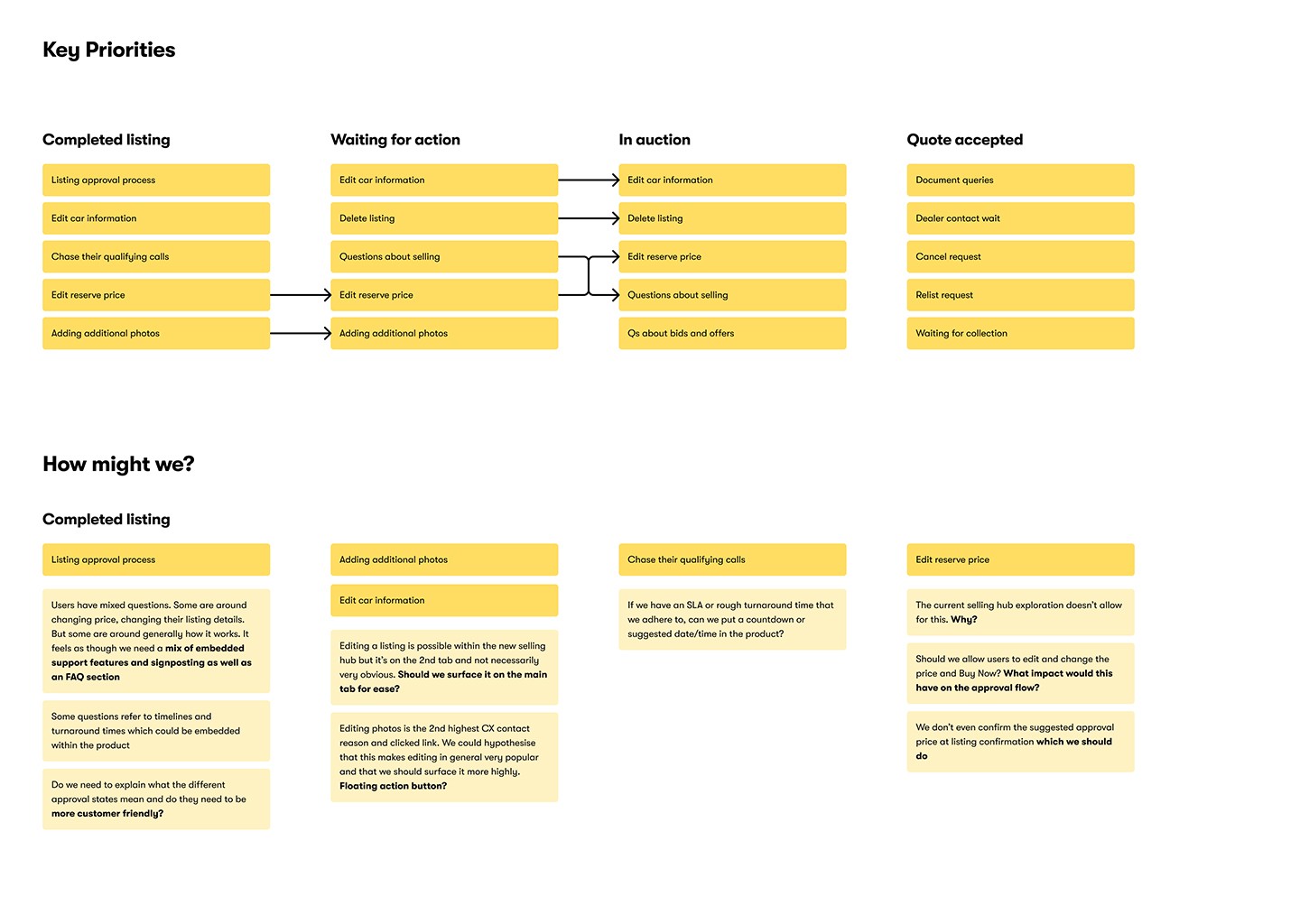
Before designing the Sale Portal, I audited the existing selling hub end-to-end, capturing CRM and email flows at each status and examined those touch points to see where content was missing or buried. I paired that audit data across contact, click and sentiment surveys. The clearest finding: emails explained next steps well, but that context was missing from the in-product flow and editing was possible but hidden. That gap, support questions the product itself should answer, along with editing functionality, is what the Sale Portal set out to achieve. I turned the findings into a workshop plan, using a consistent question framework per problem area to align the team on where to focus before design started.




Approach
I split the work into two feature releases. Flag 1, UI, education and status visibility to give sellers a clear read on where their listing stands and what's next, this was scoped as the lower-risk piece to ship first. Flag 2, edit listing functionality, hands sellers direct control to correct their own listing data, but carries more backend complexity and needs change management with the operations team, who currently make every edit by hand. Scoping also had to account for real risks: sellers not discovering the self-serve tools and defaulting back to support, a confusing edit pattern creating more contacts rather than fewer and a race condition where an internal approver picks up a listing at the same moment a seller is mid-edit.
Outcome
The Sale Portal is shipped and success is being measured against targets set up front: fewer inbound support contacts for listing changes and status checks, more sellers resolving issues themselves rather than waiting on the operations team, faster turnaround on requested changes, and higher engagement with the portal between a completed listing and auction. The longer-term goal is fewer cancellations, as listings become more accurate and sellers arrive at auction with a higher intent to sell.
Next Project

Mark Meacher
mark.meacher@gmail.com
Mark Meacher
Home
CASE STUDY
Sale Portal
Giving sellers a better place to manage their listing
AI Assisted
Year: 2026
Category: Seller experience
Overview
Sellers who'd submitted a car listing on Carwow had to go through the customer support team for even a basic status update or a correction to their listing, a slow round trip for something as simple as logging wrong damage. I led design on the Sale Portal MVP project, a self-serve home for a seller's listing after submission: one place to check status, understand what happens next, edit incorrect or missing details directly, and get educated on the end-to-end selling process, so sellers can resolve issues themselves and keep their sale moving without waiting on support.
Discovery
Before designing the Sale Portal, I audited the existing selling hub end-to-end, capturing CRM and email flows at each status and examined those touch points to see where content was missing or buried. I paired that audit data across contact, click and sentiment surveys. The clearest finding: emails explained next steps well, but that context was missing from the in-product flow and editing was possible but hidden. That gap, support questions the product itself should answer, along with editing functionality, is what the Sale Portal set out to achieve. I turned the findings into a workshop plan, using a consistent question framework per problem area to align the team on where to focus before design started.
Approach
I split the work into two feature releases. Flag 1, UI, education and status visibility to give sellers a clear read on where their listing stands and what's next, this was scoped as the lower-risk piece to ship first. Flag 2, edit listing functionality, hands sellers direct control to correct their own listing data, but carries more backend complexity and needs change management with the operations team, who currently make every edit by hand. Scoping also had to account for real risks: sellers not discovering the self-serve tools and defaulting back to support, a confusing edit pattern creating more contacts rather than fewer and a race condition where an internal approver picks up a listing at the same moment a seller is mid-edit.
Outcome
The Sale Portal is shipped and success is being measured against targets set up front: fewer inbound support contacts for listing changes and status checks, more sellers resolving issues themselves rather than waiting on the operations team, faster turnaround on requested changes, and higher engagement with the portal between a completed listing and auction. The longer-term goal is fewer cancellations, as listings become more accurate and sellers arrive at auction with a higher intent to sell.
Next Project
Mark Meacher
mark.meacher@gmail.com